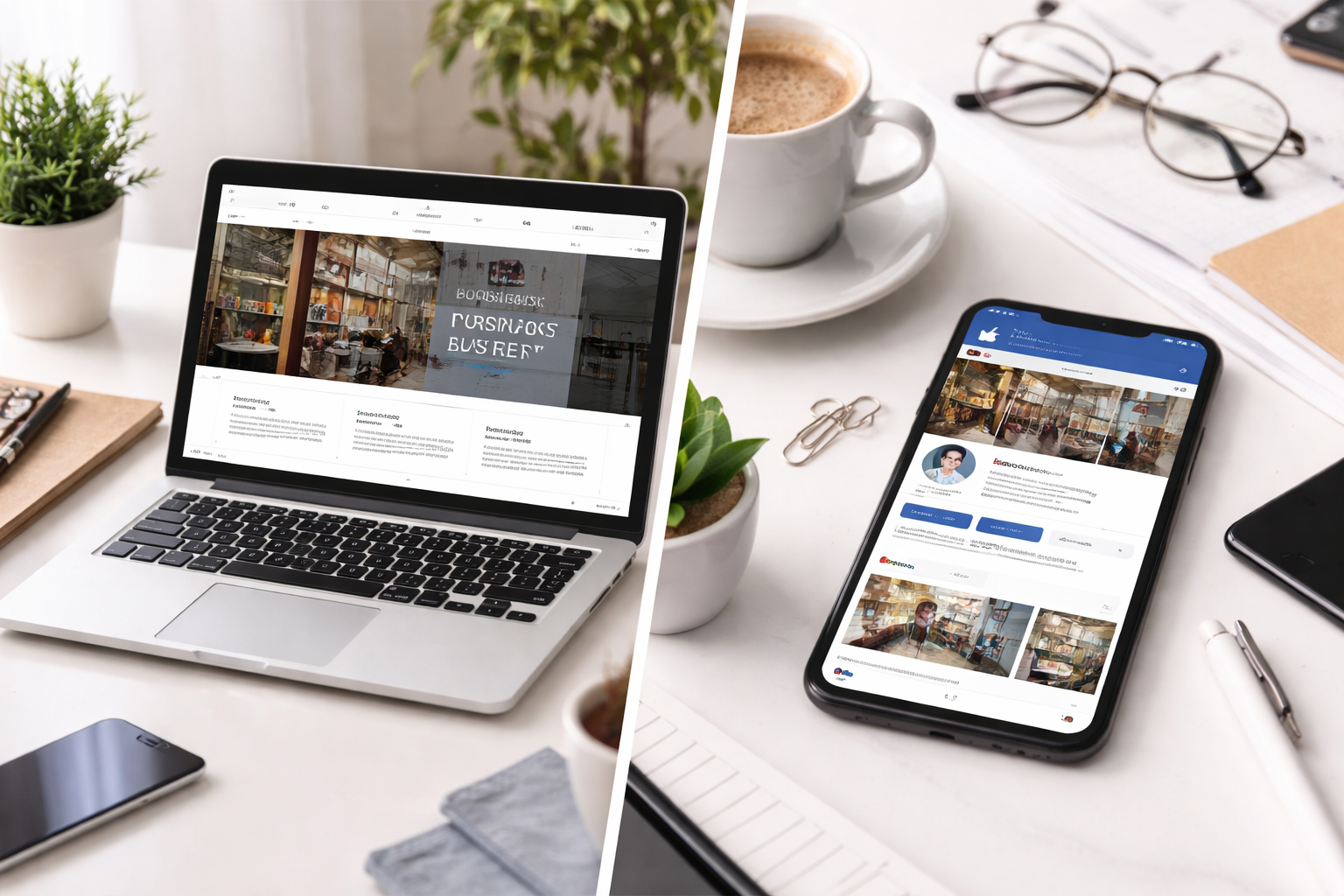
If you run a small business today, there’s a good chance you already have a Facebook page. For many business owners, that naturally leads to a simple question: do I really need a website, or is Facebook enough?
Facebook feels easy and familiar. It’s quick to post updates, share photos, and reply to messages. For many businesses, it’s often the first step into being visible online. But while Facebook is useful, it was never designed to be the main foundation of a business’s online presence.
Understanding the difference between Facebook and a website can help you decide what’s right for your business at its current stage — and where you might want to go next.
What Facebook does well
Facebook works best as a communication tool. It helps you stay connected with people who already know your business and allows you to share updates, promotions, and news quickly. For new or growing businesses, this kind of visibility can be valuable, especially when you’re starting out.
However, Facebook works inside its own system. What your customers see, when they see it, and how your page looks are all controlled by Facebook itself. Over time, those rules can change, and businesses have very little control over them.
What a website gives you that Facebook can’t
A website is different. It acts as your business’s official online home — a place that belongs entirely to you. When someone searches for your business name or your services, a website gives them a clear destination where everything is explained in one place.
Unlike Facebook, your website doesn’t depend on algorithms to be seen. It’s always available, always accessible, and works quietly in the background for your business. Customers can visit it at any time to learn what you offer, see examples of your work, and contact you directly.
For businesses that are moving beyond the very early stages, a website often becomes the point where interest turns into real enquiries.
How a website supports different stages of a business
For businesses just getting started, a simple website can act as a professional introduction. It doesn’t need to be complicated. Even a small number of well-presented pages can help establish credibility and give customers confidence that your business is legitimate and serious.
As a business grows, a website becomes more than just a presence. It can support clearer messaging, stronger branding, and better structure for services and information. This is often the stage where businesses notice that customers arrive already informed, because they’ve spent time reading the website before making contact.
For more established or online-focused businesses, a website can become a central part of how the business operates. It may support online sales, more advanced features, or more complex customer journeys. At this stage, Facebook still plays a role, but it supports the website rather than replacing it.
Trust and professionalism matter more than ever
Many customers still expect a business to have a website. Even if they first discover you through Facebook, they often look for a website to confirm that your business is real and trustworthy. A well-built website sends a clear signal that you’re invested in your business and ready to be taken seriously.
Relying on Facebook alone can sometimes leave gaps. Not everyone uses social media, and some customers prefer not to interact with businesses there. A website removes that barrier and makes your business accessible to a wider audience.
Visibility on Google
Another important difference is how people find you. When someone searches on Google for a service or business, Google prioritises websites. A properly set-up website can appear in search results and bring enquiries even when you’re not actively posting or advertising.
Facebook posts tend to be short-lived. Once they disappear from the feed, they’re rarely found again. A website, on the other hand, continues to work for your business long after it’s been published.
“I’m not technical — is a website still for me?”
This is a common concern, and an understandable one. Many business owners worry that having a website means dealing with technology, updates, or complicated systems. In reality, it doesn’t have to.
With a professionally built website, the technical side is handled for you. The website is set up properly, maintained, and supported, allowing you to focus on running your business rather than managing the technology behind it.
A website should reduce stress, not create more of it.
So which one do you actually need?
For most businesses, the strongest approach isn’t choosing between a website and Facebook, but understanding how they work together. Facebook is a useful tool for communication and promotion, while a website provides stability, clarity, and long-term value.
If your business is something you want to grow, protect, and present professionally, a website becomes the foundation that everything else can build on.
In simple terms, Facebook helps people find you, but a website helps them trust you.